
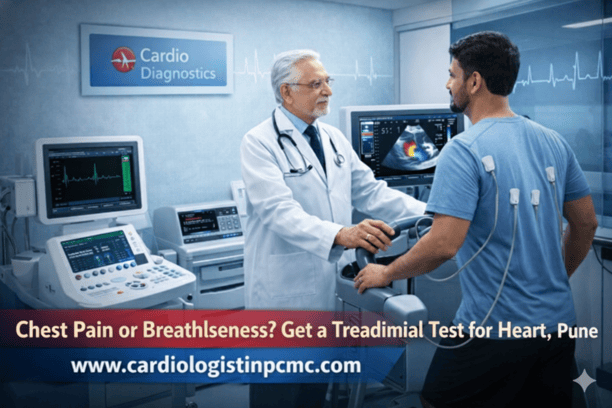
Heart-related symptoms such as chest discomfort, breathlessness, palpitations, or unexplained fatigue often raise an important question: which heart test should you undergo first? Among the most commonly recommended cardiac investigations are the ECG (Electrocardiogram) and the TMT (Treadmill Test). While both tests assess heart health, they serve different purposes and provide different insights into how the heart functions.
Many patients assume that an ECG alone is sufficient to detect all heart problems. While ECG is a valuable and essential test, it records the heart’s electrical activity only at rest. Some heart conditions, particularly those related to reduced blood flow to the heart, may not appear when the body is relaxed. This is where a treadmill test becomes crucial, as it evaluates how the heart performs under physical stress.
For residents of Pimpri and the PCMC area, access to advanced cardiac diagnostics has made it easier to choose the right test based on symptoms and risk factors. Doctors often recommend an ECG as an initial screening tool, followed by a TMT when more detailed assessment is needed. The treadmill test for heart in pimpri plays a key role in detecting hidden heart issues that may not show up on a resting ECG.
Understanding the difference between ECG and TMT empowers patients to make informed decisions and seek timely care. This article explains how each test works, when doctors recommend them, and how to determine which one is right for you.
What Is an ECG and What Does It Detect?
An ECG, or electrocardiogram, is one of the most basic and widely used heart tests. It records the electrical signals that control the heartbeat and displays them as wave patterns on a graph. This test helps doctors understand heart rhythm, rate, and electrical conduction.
ECG is especially useful in detecting arrhythmias, previous heart attacks, conduction abnormalities, and acute cardiac events. It is quick, painless, and performed while the patient is at rest. Electrodes are placed on the chest, arms, and legs, and the test usually takes just a few minutes.
However, ECG has limitations. Since it captures heart activity only at rest, it may appear normal even if the patient experiences chest pain or breathlessness during physical activity. In cases where symptoms occur only during exertion, further evaluation is required.
Doctors often use ECG as a first-line test. If abnormalities are detected, treatment can begin immediately. If ECG results are normal but symptoms persist, cardiologists may suggest additional testing such as a treadmill test to gain deeper insights into heart performance.
What Is a Treadmill Test and How Is It Different?
A treadmill test, also known as a TMT or stress test, evaluates how the heart responds to physical exertion. During the test, the patient walks on a treadmill with gradually increasing speed and incline while heart activity is continuously monitored.
The key difference between ECG and TMT is that the treadmill test assesses the heart under stress. Many heart conditions, particularly coronary artery disease, only become apparent when the heart needs more oxygen during exercise. A TMT helps identify reduced blood flow, exercise-induced arrhythmias, and abnormal blood pressure responses.
The treadmill test for heart in pimpri is commonly recommended for patients who experience chest pain, breathlessness, or fatigue during activity, even if their resting ECG is normal. The test provides valuable information about exercise tolerance, heart rate recovery, and overall cardiovascular fitness.
TMT is non-invasive and conducted under medical supervision to ensure safety. It offers a more dynamic picture of heart health compared to an ECG alone.
When Doctors Recommend ECG Over TMT
ECG is usually the first test doctors recommend when patients present with symptoms such as palpitations, dizziness, fainting, or sudden chest pain at rest. It is also essential in emergency situations, where immediate assessment of heart rhythm is required.
Patients with known arrhythmias, suspected heart attacks, or electrolyte imbalances often benefit most from an ECG. It is also commonly used for routine health check-ups, pre-surgical clearance, and monitoring known heart conditions.
In some cases, ECG findings alone are sufficient to diagnose and manage heart problems. If clear abnormalities are present, further stress testing may not be immediately necessary.
However, when ECG results are normal but symptoms suggest exertion-related heart issues, doctors may advise moving beyond ECG to more advanced testing. This ensures that no underlying condition is overlooked.
When a TMT Stress Test Becomes Essential
A treadmill test is especially important when symptoms occur during physical activity rather than at rest. Patients who feel chest tightness while walking, breathlessness while climbing stairs, or fatigue during mild exercise often require stress testing.
The treadmill test for heart in pimpri is widely used to detect coronary artery disease at an early stage. It helps doctors determine whether the heart receives enough blood during exertion and whether arteries may be partially blocked.
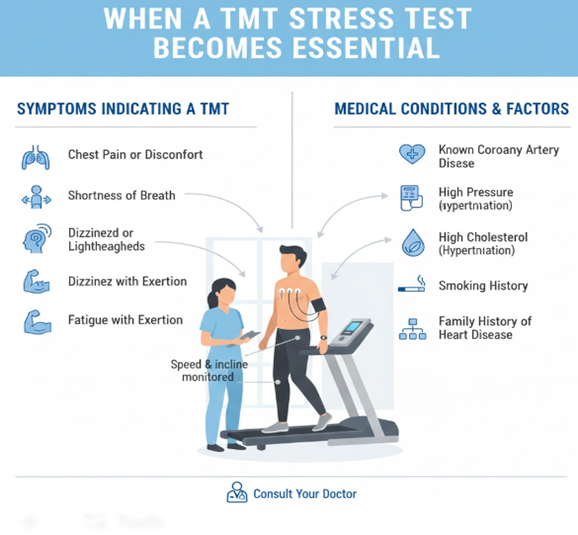
TMT is also recommended for individuals with risk factors such as diabetes, high blood pressure, obesity, smoking, or a family history of heart disease. Even without symptoms, stress testing can reveal early signs of heart strain.
In many cases, doctors use TMT results to decide whether further tests like angiography are needed or whether lifestyle changes and medication are sufficient.
Accuracy, Safety, and Patient Experience Comparison
Both ECG and TMT are safe, non-invasive tests, but they differ in accuracy depending on the condition being evaluated. ECG is highly accurate for detecting rhythm-related issues, while TMT is more effective for diagnosing exertion-related heart problems.
From a patient perspective, ECG is quick and requires no physical effort, making it suitable for all age groups. TMT requires the ability to walk on a treadmill and may not be suitable for individuals with orthopaedic limitations or severe physical weakness.
Facilities operating as a tmt stress test centre in pcmc, pune follow strict safety protocols. Tests are supervised by trained professionals, and monitoring ensures that any discomfort is addressed immediately. The choice between ECG and TMT depends on symptoms, physical ability, and clinical judgment rather than patient preference alone.
How Doctors Decide the Right Test for You
Cardiologists consider several factors before recommending a heart test. These include the nature of symptoms, medical history, age, lifestyle, and existing risk factors. In many cases, ECG and TMT are complementary rather than competing tests.
Doctors may start with an ECG and proceed to a treadmill test if needed. In some situations, both tests are advised to gain a complete picture of heart health.
Access to advanced diagnostics and experienced cardiologists in Pimpri makes it easier to follow a step-by-step evaluation approach. The treadmill test for heart in pimpri is often part of a broader cardiac assessment plan rather than a standalone test.
Clear communication between doctor and patient ensures that the chosen test aligns with individual health needs and safety considerations.
Role of ECG and TMT in Preventive Heart Care
Preventive cardiology focuses on identifying heart problems before they progress into serious or life-threatening conditions. Both ECG and treadmill testing play important but distinct roles in this preventive approach. ECG is often the first screening tool used during routine health check-ups to identify silent rhythm disturbances or early electrical abnormalities of the heart.
For individuals without symptoms but with risk factors such as high blood pressure, diabetes, smoking, or family history of heart disease, an ECG can provide valuable baseline information. However, many early stages of coronary artery disease do not cause noticeable ECG changes when the heart is at rest. This is where stress testing becomes highly beneficial.
A treadmill test helps uncover hidden heart strain that only appears when the heart is pushed to work harder. It allows doctors to assess exercise capacity, heart rate response, and blood pressure changes under stress. In preventive care, these findings help cardiologists recommend lifestyle modifications, exercise plans, or medications before serious complications develop.
Using both tests strategically enables doctors to design personalized prevention plans. Early identification through ECG and TMT significantly reduces the risk of heart attacks and supports long-term heart health, especially for working professionals and middle-aged individuals.
Cost, Accessibility, and Convenience of Heart Tests in PCMC
When choosing between ECG and treadmill testing, patients often consider cost, availability, and convenience in addition to medical advice. ECG is widely available, quick to perform, and relatively inexpensive, making it an accessible option for routine screening and initial evaluation.
Treadmill testing requires specialized equipment, trained staff, and medical supervision, which may make it slightly more costly than an ECG. However, its ability to detect exercise-related heart problems makes it a valuable investment in accurate diagnosis and long-term care. In PCMC, several advanced diagnostic centers offer treadmill testing with standardized protocols to ensure patient safety and reliable results.
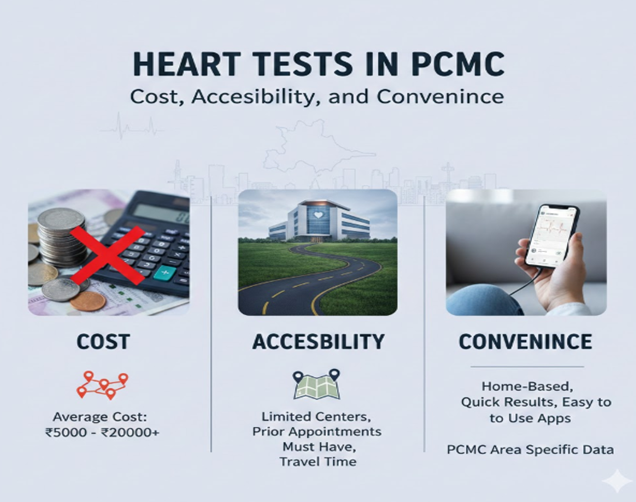
Modern cardiac clinics focus on patient comfort, minimal waiting time, and clear reporting. Many centers combine ECG and TMT services under one roof, allowing smooth transition from initial screening to advanced testing if required.
With improved accessibility in Pimpri and surrounding areas, patients no longer need to travel far for comprehensive heart evaluation. Choosing a trusted diagnostic center ensures accurate results, timely consultations, and peace of mind—making heart testing both convenient and effective for today’s busy lifestyles.
Conclusion and Call to Action
Choosing between an ECG and a treadmill test depends on your symptoms, risk factors, and how your heart behaves under stress. While ECG is an excellent starting point for evaluating heart rhythm and resting heart activity, it may not detect problems that appear only during physical exertion. A treadmill test fills this gap by revealing how your heart performs when it works harder.
For individuals experiencing chest pain, breathlessness, or exercise-related discomfort, the treadmill test for heart in pimpri can be a crucial diagnostic tool. It helps detect early heart disease, assess fitness levels, and guide effective treatment plans.
If you are unsure which test is right for you, consult experienced cardiologists who can evaluate your condition thoroughly. Visit https://cardiologistinpcmc.com/ to connect with trusted heart specialists and leading diagnostic facilities, including a reliable tmt stress test centre in pcmc, pune. Take the right step today toward accurate diagnosis, timely treatment, and long-term heart health.
Frequently Asked Questions
What is the main difference between an ECG and a TMT test?
An ECG records the heart’s electrical activity while the body is at rest, whereas a TMT (treadmill test) evaluates how the heart performs during physical exercise. TMT is more useful for detecting heart problems that appear only during exertion.
Is a TMT required even if the ECG results are normal?
Yes, if the ECG is normal but the patient experiences chest pain, breathlessness, or discomfort while walking, climbing stairs, or exercising, doctors may recommend a treadmill test for further evaluation.
3. Who is recommended to undergo a treadmill test for heart in Pimpri?
TMT is recommended for patients who experience chest discomfort, fatigue, or shortness of breath during physical activity, as well as for individuals with diabetes, high blood pressure, obesity, or a family history of heart disease.
How safe and painless is an ECG test?
An ECG is completely safe, painless, and non-invasive. Electrodes are placed on the body to record heart activity, and the test usually takes only a few minutes to complete.
5. Is the TMT test risky?
A treadmill test is safe when performed under proper medical supervision. Reputed diagnostic centres in PCMC follow strict safety protocols and continuously monitor patients during the test.
6. Which test is more accurate: ECG or TMT?
Accuracy depends on the condition being evaluated. ECG is more accurate for detecting rhythm and electrical abnormalities, while TMT is more effective in identifying coronary artery disease and exercise-related heart problems.
7. Can all patients undergo a TMT stress test?
No, patients with severe joint problems, paralysis, or extreme physical weakness may not be suitable for a TMT. In such cases, doctors recommend alternative diagnostic tests.
8. How can I choose the best TMT stress test centre in PCMC, Pune?
A good centre should have experienced cardiologists, advanced equipment, proper patient monitoring, and clear reporting. Trusted medical centres in the Pimpri–PCMC area ensure accurate diagnosis and patient safety.