
High blood pressure — medically known as hypertension — affects an estimated 220 million adults in India alone, making it one of the most prevalent chronic conditions in the country. Yet surveys consistently show that nearly half of those with hypertension are completely unaware they have it.
The reason is straightforward and dangerous: high blood pressure almost never causes symptoms. It silently damages your arteries, heart, kidneys, and brain over years — until the damage becomes severe enough to trigger a heart attack, stroke, or kidney failure.
This is why hypertension has earned the name ‘the silent killer.’ And it is why understanding your blood pressure numbers, knowing your risk, and getting regularly checked is one of the most important things you can do for your long-term health.
What Is Blood Pressure?
Blood pressure is the force that your blood exerts against the walls of your arteries as the heart pumps it around the body. It is measured in millimetres of mercury (mmHg) and expressed as two numbers:
- Systolic pressure (the top number) — the pressure when your heart beats and pumps blood out
- Diastolic pressure (the bottom number) — the pressure when your heart is at rest between beats
A reading is written as systolic/diastolic — for example, 120/80 mmHg. When doctors say ‘one-twenty over eighty,’ this is what they mean.
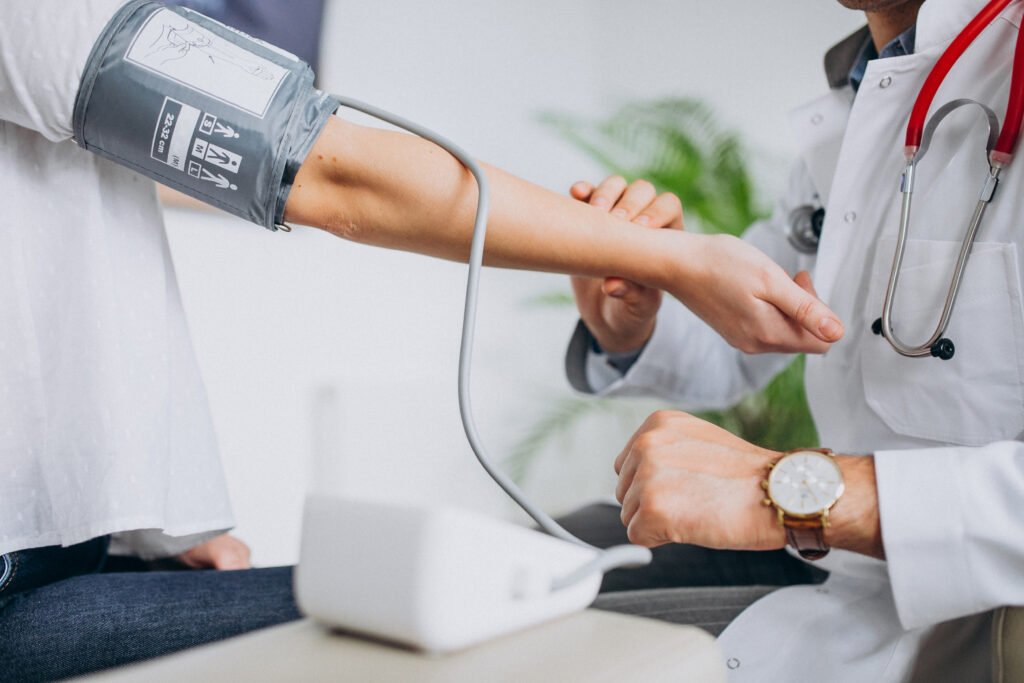
| How is it measured?Blood pressure is measured using an inflatable cuff placed around the upper arm, connected to a pressure gauge. It takes less than a minute. For an accurate reading: sit quietly for 5 minutes before measuring, avoid caffeine or exercise for 30 minutes beforehand, keep your arm at heart level, and take two readings 1–2 minutes apart and average them. |
Understanding Your Blood Pressure Numbers
Not all elevated blood pressure readings are equal. Cardiologists use the following categories to guide treatment decisions:
| Category | Systolic (top) | Diastolic (bottom) | Action Required |
| Normal | Less than 120 | Less than 80 | Maintain healthy habits |
| Elevated | 120–129 | Less than 80 | Lifestyle changes recommended |
| High — Stage 1 | 130–139 | 80–89 | Lifestyle changes; medication may be needed |
| High — Stage 2 | 140 or higher | 90 or higher | Medication usually required |
| Hypertensive Crisis | Higher than 180 | Higher than 120 | Seek emergency care immediately |
| Hypertensive crisis — act immediately:A reading above 180/120 mmHg is a medical emergency. If accompanied by chest pain, shortness of breath, severe headache, vision changes, or confusion, call emergency services immediately. Do not wait to see if it comes down on its own. |
Why High Blood Pressure Is Called the Silent Killer
The vast majority of people with hypertension experience no symptoms whatsoever — sometimes for years or even decades. The heart and arteries quietly adapt to the elevated pressure, often masking the damage being done beneath the surface.
By the time symptoms do appear, significant organ damage has typically already occurred. This is precisely why hypertension is so dangerous — and why the only reliable way to know your blood pressure is to measure it regularly.
Hypertension is the leading risk factor for:
- Heart attack — sustained high pressure accelerates arterial plaque build-up
- Stroke — the leading direct cause of haemorrhagic and ischaemic stroke
- Heart failure — the heart becomes enlarged and weakened from working against high pressure
- Chronic kidney disease — damaged kidney arteries reduce filtration function over time
- Vision loss — hypertension damages the small blood vessels of the retina
- Vascular dementia — reduced blood flow to the brain accelerates cognitive decline
Symptoms of High Blood Pressure — When They Do Occur
While hypertension is usually symptom-free, very high blood pressure — particularly during a hypertensive crisis — can produce warning signs. These include:
- Severe headache, often described as a pounding sensation at the back of the head
- Blurred or double vision, or seeing spots
- Nosebleeds (epistaxis) — though this is an unreliable indicator on its own
- Shortness of breath or difficulty breathing
- Chest pain or tightness
- Dizziness or a sensation of the room spinning
- Nausea or vomiting
- Confusion or difficulty thinking clearly
- Blood in the urine
| Important:Do not wait for symptoms to get your blood pressure checked. The absence of symptoms does not mean your blood pressure is normal. Millions of people with dangerously high BP feel completely fine. Regular monitoring is the only way to know. |
What Causes High Blood Pressure?
Hypertension is classified into two types based on its cause:
Primary (essential) hypertension — 90–95% of cases
This is the most common form. It develops gradually over many years and has no single identifiable cause. Instead, it results from a combination of genetic predisposition and lifestyle factors:
- A diet high in salt and low in potassium
- Physical inactivity and a sedentary lifestyle
- Excess body weight, particularly abdominal obesity
- Smoking — nicotine causes an immediate spike in blood pressure and damages vessel walls over time
- Chronic stress and poor sleep quality
- Excessive alcohol consumption
- Ageing — arteries naturally stiffen with age, raising systolic pressure
- Family history — hypertension has a strong genetic component
Secondary hypertension — 5–10% of cases
Secondary hypertension has a specific underlying medical cause. It tends to appear suddenly and may be more severe. Common causes include:
- Chronic kidney disease or renal artery stenosis
- Primary aldosteronism (overproduction of aldosterone by the adrenal gland)
- Obstructive sleep apnoea
- Thyroid disorders — both underactive and overactive thyroid can affect BP
- Certain medications — including NSAIDs, oral contraceptives, decongestants, and some antidepressants
- Phaeochromocytoma — a rare adrenal gland tumour
| Why this matters:If your blood pressure is difficult to control despite multiple medications, or if it developed suddenly at a young age, your cardiologist may investigate for a secondary cause. Treating the underlying condition can sometimes resolve the hypertension entirely. |
Who Is at Risk? Key Risk Factors for Hypertension
Certain groups are at significantly higher risk of developing high blood pressure:
- Adults over 60 — systolic pressure tends to rise with age as arteries stiffen
- South Asians — Indians and South Asians develop hypertension earlier and at lower BMI than Western populations, often due to higher rates of insulin resistance and abdominal fat
- People with a family history of hypertension or early cardiovascular disease
- Those with diabetes or prediabetes — insulin resistance promotes sodium retention and vascular stiffness
- Individuals with obesity, particularly central (belly) fat
- Smokers — current or former
- People with chronic stress or poor sleep (less than 6 hours per night)
- Women post-menopause — oestrogen has a protective effect on blood vessels; its decline raises BP risk
Long-Term Effects of Uncontrolled Hypertension on the Heart and Body
Left untreated, hypertension relentlessly damages every major organ system:
The heart
The heart must work harder to pump blood against elevated arterial pressure. Over time, the left ventricle thickens (left ventricular hypertrophy), the heart becomes less efficient, and heart failure develops. Hypertension also accelerates coronary artery disease, dramatically increasing heart attack risk.
The brain
Hypertension is the single largest modifiable risk factor for stroke. It damages the small blood vessels supplying the brain, leading to both haemorrhagic stroke (bleeding in the brain) and ischaemic stroke (blocked blood supply). Chronic high BP also contributes to vascular dementia and cognitive decline.
The kidneys
The kidneys rely on a precise blood pressure gradient to filter waste from the blood. Hypertension damages the delicate filtration units (glomeruli), leading to chronic kidney disease and eventually kidney failure if uncontrolled.
The eyes
The small blood vessels of the retina are particularly sensitive to elevated pressure. Hypertensive retinopathy can cause vision changes, bleeding, and in severe cases, blindness. A routine eye examination can sometimes reveal signs of hypertension before a formal diagnosis.
Lifestyle Changes That Lower Blood Pressure
For elevated or Stage 1 hypertension, lifestyle changes are the first line of treatment — and they can be remarkably effective. Here is the evidence:
| Lifestyle Change | Expected BP Reduction |
| Reduce salt to less than 5g/day | Up to 5–6 mmHg systolic reduction |
| Follow DASH or Mediterranean diet | Up to 8–14 mmHg systolic reduction |
| Exercise 30 min/day, 5 days/week | 4–9 mmHg systolic reduction |
| Lose 5 kg of body weight | Approximately 5 mmHg systolic reduction |
| Limit alcohol to 1 drink/day | 2–4 mmHg systolic reduction |
| Quit smoking | Immediate reduction in BP spike risk |
| Manage stress (yoga, meditation) | 2–5 mmHg systolic reduction |
| Sleep 7–8 hours per night | Reduces risk of resistant hypertension |
| The combined effect:If you implement several of these changes simultaneously — reduce salt, exercise regularly, lose weight, and quit smoking — the cumulative BP reduction can be as large as that achieved by a single medication. Lifestyle change is powerful medicine. |
Medications: When Lifestyle Changes Are Not Enough
For Stage 2 hypertension, or if lifestyle changes alone do not bring your blood pressure to target within 3–6 months, medication is recommended. There are several well-established classes of antihypertensive drugs, each working through a different mechanism:
- ACE inhibitors (e.g., enalapril, ramipril) — relax blood vessels and reduce fluid retention; particularly beneficial in patients with diabetes or kidney disease
- ARBs (e.g., losartan, telmisartan) — similar to ACE inhibitors; used when ACE inhibitors cause a dry cough
- Calcium channel blockers (e.g., amlodipine) — relax the muscles of blood vessel walls; very effective in Indian and elderly patients
- Thiazide diuretics (e.g., hydrochlorothiazide) — reduce blood volume by promoting sodium excretion; often used in combination
- Beta-blockers (e.g., metoprolol, atenolol) — reduce heart rate and output; particularly useful when hypertension coexists with angina or heart failure
Most patients with Stage 2 hypertension require two or more medications to achieve target blood pressure. This is not a sign of failure — it reflects the complexity of blood pressure regulation, which involves multiple physiological pathways.
| Never stop medication without advice:A very common and dangerous mistake is stopping antihypertensive medication once blood pressure normalises — assuming the problem is ‘cured.’ Blood pressure is controlled by the medication, not cured. Stopping it abruptly can cause a dangerous rebound spike. Always consult your cardiologist before making any changes to your prescription. |
When Should You See a Cardiologist?
While a general physician can manage straightforward hypertension, a cardiologist is recommended in the following situations:
- Your blood pressure remains above target despite taking two or more medications
- You have signs of end-organ damage — enlarged heart, kidney impairment, or hypertensive retinopathy
- You developed hypertension before age 40, which raises suspicion for a secondary cause
- You have coexisting heart disease — coronary artery disease, heart failure, or arrhythmia
- You are pregnant or planning pregnancy with hypertension (requires specialised management)
- Your blood pressure fluctuates dramatically or is difficult to measure accurately
- You have experienced a hypertensive crisis requiring emergency treatment
- You want a comprehensive cardiovascular risk assessment alongside your BP management
| Don’t wait for symptoms:If you have not had your blood pressure checked in the past year — or if you have any of the risk factors listed in this article — book an appointment today. A blood pressure reading takes less than two minutes and can be genuinely life-saving. |
Frequently Asked Questions
Can young people get high blood pressure?
Yes — and it is becoming increasingly common due to rising rates of obesity, stress, poor diet, and physical inactivity among younger adults. In India, hypertension is being diagnosed in people in their 20s and 30s more frequently than in previous generations. Young adults with a family history of hypertension or who have multiple risk factors should be screened regularly.
Is white coat hypertension real?
Yes. White coat hypertension refers to elevated blood pressure readings in a clinical setting that are normal at home — thought to be caused by anxiety about the medical environment. It is real and common, affecting up to 20% of patients. However, it is not entirely benign: people with white coat hypertension have a higher risk of developing sustained hypertension over time. Home blood pressure monitoring and 24-hour ambulatory BP monitoring can help clarify the diagnosis.
How often should I check my blood pressure at home?
If you have been diagnosed with hypertension or are in the elevated range, measuring twice daily — once in the morning before medication and once in the evening — for a week each month gives a reliable picture. Record all readings and bring them to your cardiologist. A validated upper-arm digital BP monitor is recommended over wrist devices for accuracy.
Can anxiety or stress cause permanent hypertension?
Acute stress and anxiety cause temporary spikes in blood pressure. Chronic, sustained stress — particularly when combined with poor sleep, unhealthy coping behaviours, and physical inactivity — can contribute to sustained hypertension over time. Managing stress is therefore a legitimate and effective part of hypertension treatment, not just a lifestyle nicety.
The Bottom Line
High blood pressure is common, dangerous, and almost entirely preventable and treatable — but only if you know you have it. The barrier is not treatment. The barrier is detection.
Get your blood pressure checked. If it is elevated, take it seriously. Make the lifestyle changes. Take the medications if prescribed. And see a cardiologist if your situation warrants it.
The investments you make in managing your blood pressure today are investments in your heart, your brain, your kidneys, and your quality of life for decades to come. A single two-minute measurement could change the trajectory of your health entirely.
| Check Your Blood Pressure — Book an Appointment TodayOur cardiologist provides comprehensive hypertension evaluation, risk assessment, and personalised treatment plans. Early detection saves lives. |